
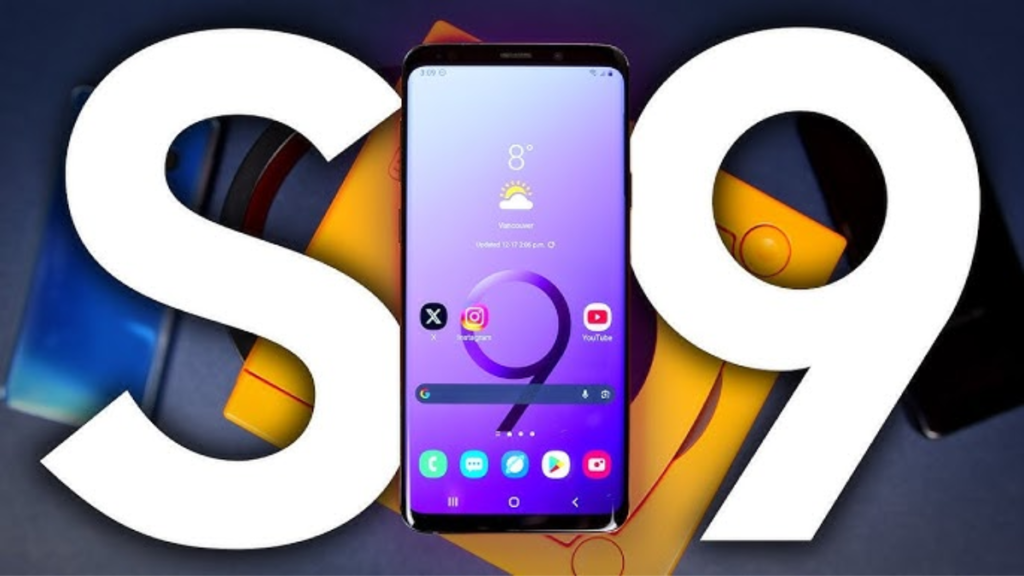

The Samsung Galaxy S9 marked a significant chapter in Samsung’s smartphone journey. Released as a successor to the Galaxy S8, the Samsung Galaxy S9 refined Samsung’s Infinity Display design, introduced groundbreaking camera features, and improved performance while maintaining a sleek, premium build. Though newer generations have since taken the spotlight, the Galaxy S9 remains one of the most memorable Android flagship devices of its era.
This in-depth article explores the design, display, performance, camera system, software, battery life, and long-term legacy of the Samsung Galaxy S9, explaining why it continues to hold a special place in smartphone history.
Samsung Galaxy S9 Premium Design and Build Quality
Samsung has always prioritized aesthetics, and the Samsung Galaxy S9 was no exception. Featuring a glass front and back protected by Gorilla Glass and framed with polished aluminum, the device exuded elegance. Its curved edges seamlessly blended into the frame, offering both beauty and ergonomic comfort.
The phone felt premium in hand, with a balanced weight distribution that made it comfortable for extended use. Samsung refined the fingerprint sensor placement compared to its predecessor, moving it below the camera module for easier access.
Available in multiple vibrant colors, including Midnight Black, Coral Blue, and Lilac Purple, the Galaxy S9 combined style and sophistication. Its IP68 water and dust resistance rating ensured durability against accidental spills and splashes.
Infinity Display: A Visual Masterpiece
One of the standout features of the Samsung Galaxy S9 was its stunning 5.8-inch Super AMOLED Infinity Display. With a Quad HD+ resolution, the display delivered exceptional sharpness, vibrant colors, and deep blacks.
Key display highlights included:
- High pixel density for crisp visuals
- HDR10 support for enhanced video playback
- Always-On Display functionality
- Edge lighting notifications
Samsung’s AMOLED technology ensured excellent contrast ratios, making media consumption a true pleasure. Whether watching movies, browsing social media, or gaming, the display provided an immersive experience.
The curved edges enhanced the visual appeal while maintaining functionality through Edge Panels, offering quick access to apps and tools.
Revolutionary Camera with Variable Aperture
The Samsung Galaxy S9 introduced one of the most innovative camera features of its time: a variable aperture lens. The rear 12MP camera could switch between f/1.5 and f/2.4 apertures depending on lighting conditions.
This technology allowed:
- Brighter photos in low-light environments
- Sharper images in well-lit scenes
- Improved dynamic range
- Reduced noise in night photography
The dual aperture system mimicked the human eye, adjusting automatically to capture optimal light. This innovation significantly improved low-light photography compared to many competitors at the time.
Samsung also introduced Super Slow-Mo video recording at 960 frames per second, allowing users to capture dramatic slow-motion clips effortlessly.
Front Camera and Selfie Experience
The Samsung Galaxy S9 featured an 8MP front-facing camera with autofocus, ensuring sharper selfies. Samsung included beauty filters and AR Emoji features, enabling users to create animated avatars based on their facial expressions.
While AR Emoji was more of a fun addition, it demonstrated Samsung’s effort to incorporate interactive software features into the camera experience.
Performance and Hardware Power
Under the hood, the Galaxy S9 was powered by either the Exynos 9810 processor or the Qualcomm Snapdragon 845, depending on the region. These chipsets delivered strong performance for multitasking, gaming, and daily use.
With 4GB of RAM and multiple storage options, the device handled demanding applications smoothly. The inclusion of expandable storage via microSD card was a significant advantage over many competitors.
Gaming performance was solid, supported by the powerful GPU and optimized software integration. The Samsung Galaxy S9 could handle high-end games without significant lag or overheating.
Software and User Interface
The Samsung Galaxy S9 launched with Android 8.0 Oreo and Samsung’s Experience UI. The interface was clean, customizable, and feature-rich.
Notable software features included:
- Split-screen multitasking
- Secure Folder for privacy
- Samsung Pay support
- Customizable themes and icons
Samsung’s software updates improved stability and introduced newer Android versions over time. The One UI update later refined the user experience, making navigation more intuitive.
Audio Innovation: Stereo Speakers and Dolby Atmos
Samsung partnered with AKG to enhance the audio experience on the Samsung Galaxy S9. The device featured stereo speakers tuned by AKG and supported Dolby Atmos for immersive sound.
Unlike many modern smartphones, the Galaxy S9 retained the 3.5mm headphone jack, a feature appreciated by users who preferred wired headphones.
The combination of stereo speakers and Dolby Atmos provided a rich multimedia experience, making the device ideal for streaming and gaming.
Battery Life and Charging Capabilities
The Samsung Galaxy S9 housed a 3,000mAh battery, offering reliable all-day usage under moderate conditions. While not the largest battery in its class, Samsung’s software optimization ensured efficient power management.
Charging features included:
- Fast wired charging
- Fast wireless charging
- Power-saving modes
The inclusion of wireless charging added convenience, especially for users invested in Samsung’s ecosystem.
Security and Biometric Features
Samsung enhanced security options on the Samsung Galaxy S9, offering multiple biometric authentication methods.
These included:
- Iris scanning
- Facial recognition
- Fingerprint sensor
The Intelligent Scan feature combined facial recognition and iris scanning for improved accuracy and speed. Samsung Knox provided additional protection for sensitive data.
Connectivity and Network Support
The Samsung Galaxy S9 supported advanced LTE connectivity and included Bluetooth 5.0 for improved wireless performance. NFC support enabled contactless payments via Samsung Pay.
Other connectivity features included:
- USB Type-C port
- Wi-Fi dual-band support
- GPS and GLONASS compatibility
These features ensured stable connections for streaming, browsing, and navigation.
Durability and Everyday Practicality
With IP68 certification, the Samsung Galaxy S9 could withstand water submersion up to 1.5 meters for 30 minutes. This added peace of mind for users concerned about accidental spills or rain exposure.
The durable build and quality materials contributed to the device’s long-term reliability.
Comparison with the Galaxy S8
Compared to its predecessor, the Samsung Galaxy S8, the Samsung Galaxy S9 refined rather than reinvented the design.
Major improvements included:
- Better fingerprint sensor placement
- Enhanced camera performance
- Stereo speakers
- Improved processor
While the design remained similar, the internal upgrades made the S9 a meaningful improvement.
Long-Term Legacy and Impact
The Galaxy S9 demonstrated Samsung’s commitment to innovation. Its variable aperture camera set a new standard for smartphone photography at the time.
Although newer devices like the Samsung Galaxy S25 Ultra now dominate headlines, the Samsung Galaxy S9 remains a reminder of Samsung’s continuous evolution.
The device helped establish Samsung as a leader in display technology, camera innovation, and premium smartphone design.
Strengths and Limitations
Strengths
- Exceptional display quality
- Innovative variable aperture camera
- Stereo speakers with Dolby Atmos
- Expandable storage
- Premium build quality
Limitations
- Moderate battery capacity
- No major design overhaul from S8
- AR Emoji lacked realism
Despite minor limitations, the Galaxy S9 delivered a well-rounded flagship experience.
Who Should Still Consider the Samsung Galaxy S9?
While it is no longer a current flagship, the Galaxy S9 may still appeal to users seeking a compact phone with premium features at an affordable price in the second-hand market.
Its display quality and camera performance remain respectable for casual users.
Conclusion: A Timeless Android Classic
The Samsung Galaxy S9 was more than just a yearly upgrade—it was a carefully refined flagship that introduced meaningful innovations without compromising design. From its brilliant Infinity Display to its groundbreaking variable aperture camera, the device showcased Samsung’s engineering excellence.
Though technology has advanced significantly since its release, the Samsung Galaxy S9 remains a symbol of innovation and premium craftsmanship. It stands as a timeless Android classic that helped shape the direction of modern smartphones.